A convertible is almost never anybody's only car, and almost never a rational purchase. That is exactly why the used market treats them the way it does. Discretionary cars fall harder and faster than the sedans and SUVs people buy because they have to — and the more expensive the car, the more brutal the arithmetic.
A grand tourer that cost a quarter of a million dollars new can sit at a fraction of that a decade later. The car did not get worse. The market moved on to the next one.
What follows is organised by what you actually want from a convertible rather than by price, along with what we have learned checking these cars before they reach our floor.
Why does buying a used luxury convertible make sense?
Because convertibles depreciate faster than the equivalent coupe, and they do it without getting worse to drive.
The steepest part of the curve is the first three to six years. Buy after it flattens and the original owner has absorbed the expensive part on your behalf. In a segment where the appeal is emotional rather than practical, the gap between what a car cost and what it is worth is unusually wide.
There is a second, quieter advantage. Convertibles tend to be second or third cars, so they tend to be driven less and stored better. A fifteen-year-old convertible with 40,000 miles is common. A fifteen-year-old sedan with 40,000 miles is not.
The catch is that low mileage cuts both ways, and we will come back to that with a specific example.
What are the best used luxury convertibles?
If you want a grand tourer you can genuinely use
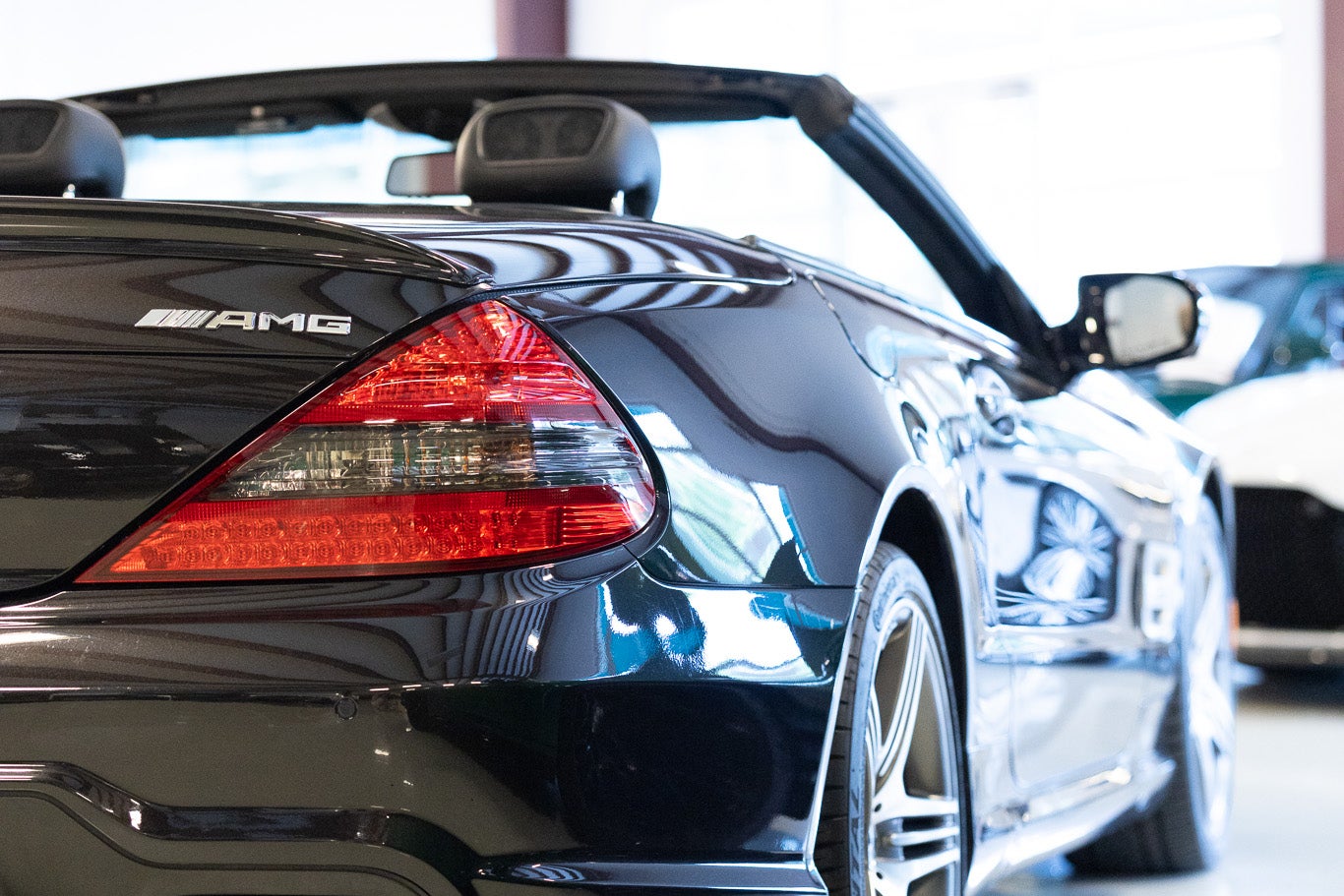
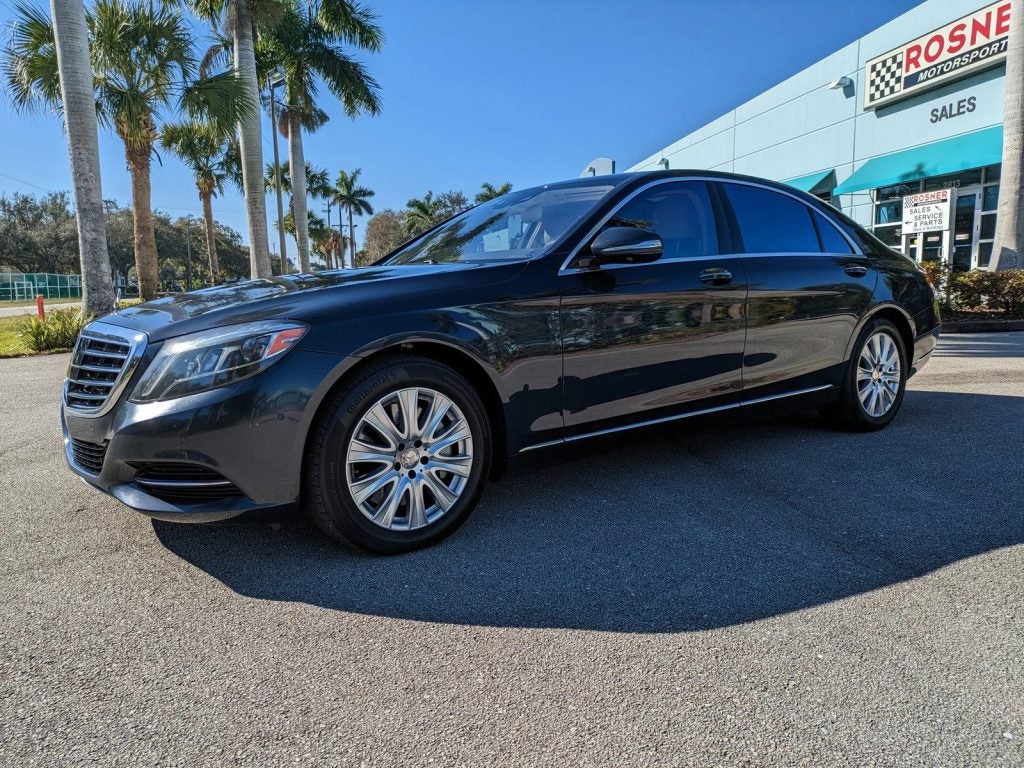
Mercedes-Benz SL
The SL has been Mercedes' answer to this question for sixty years, and the folding hardtop is the single most useful piece of engineering in any convertible: a quiet, secure, properly insulated coupe with the roof up, and a real convertible ninety seconds later.
It is also the model we sell most of. "We sell more Mercedes-Benz SLs than almost any other model," says Dan Magee, a sales consultant at Rosner Motorsports, "and the 2020-and-earlier hardtop cars continue to be the most desirable." Asked why Mercedes moved away from the retractable hardtop, his answer is short: "That's really a question for Mercedes. Personally, I wish they hadn't."
The R230 generation, particularly in SL 63 AMG form, is the current value sweet spot. Its naturally aspirated 6.2-litre V8 is one of the great modern Mercedes engines — no turbochargers, a hard edge to the noise, and a character later forced-induction AMGs never quite recovered.
What to watch: the roof hydraulics, and Active Body Control. ABC is superb when healthy and genuinely costly when not. A documented service history is worth paying real money for.
Bentley Azure
Coachbuilt, hand-finished, and vastly expensive new. The Azure depreciated dramatically, stopped, and the best examples have been climbing for some time. The 6.75-litre turbocharged V8 is a piece of engineering history. Maintenance costs bear no relation to purchase price, which is why buying the cheapest example available is usually the most expensive decision you can make.
If you want a driver's car
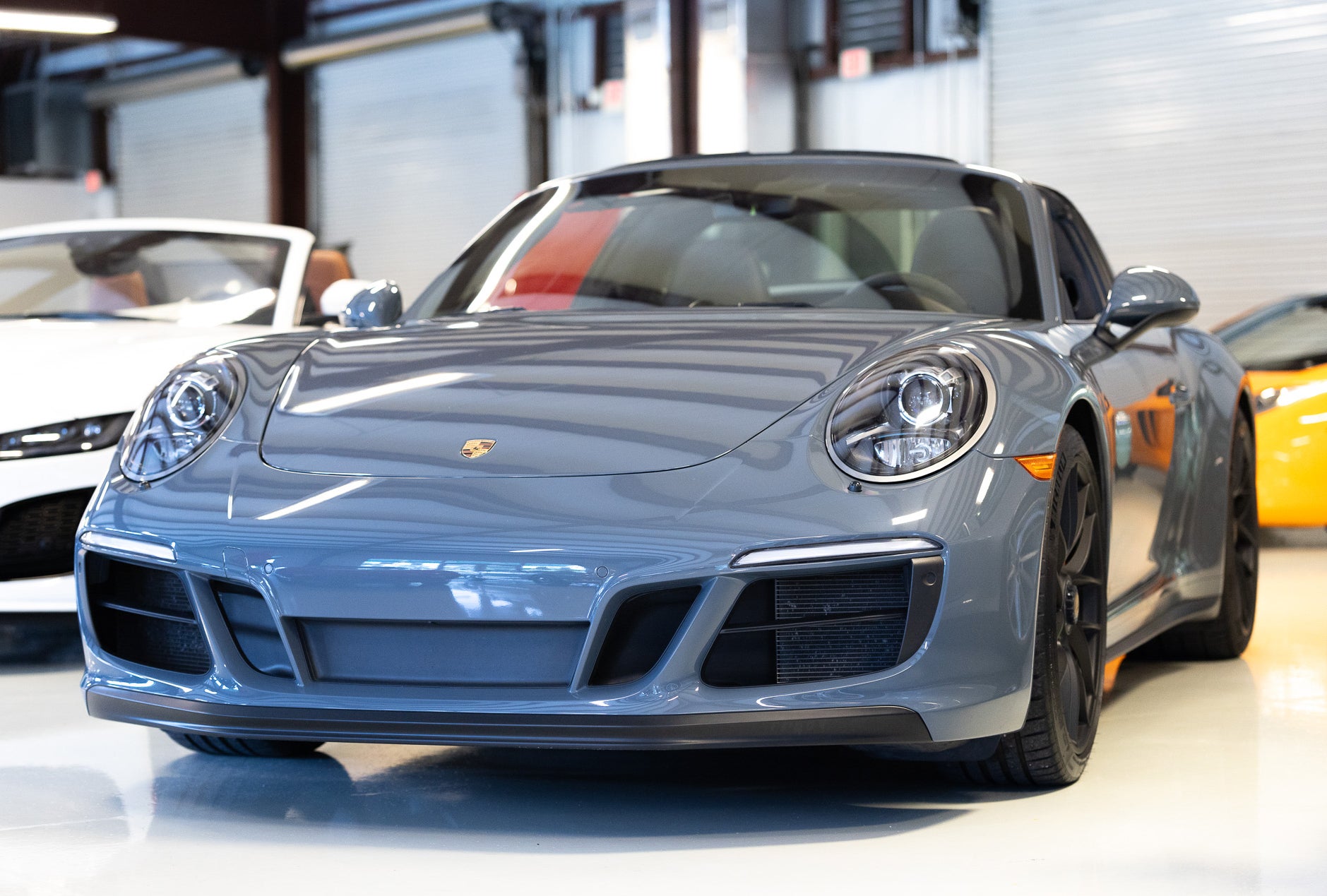
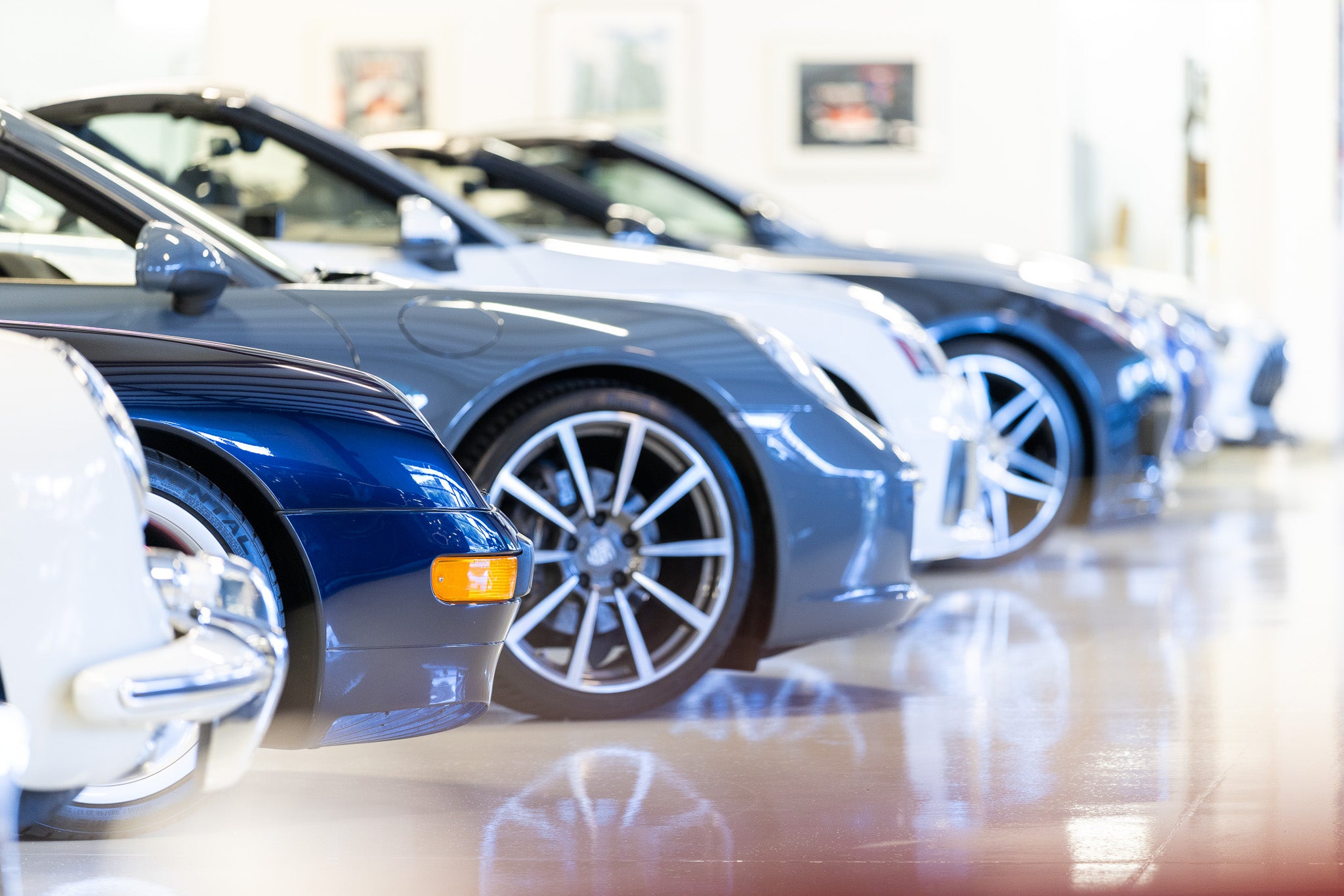
Porsche 911 Cabriolet
The 911 is the rare convertible that loses very little in becoming one. Chassis rigidity is excellent, the roof mechanism is among the best-engineered in the business, and the driving experience survives the conversion largely intact. The Carrera 4 GTS is arguably the sweet spot of the modern range: most of the GT-car hardware, all-wheel-drive traction, and a specification that reads as deliberate rather than optional-box-ticked.
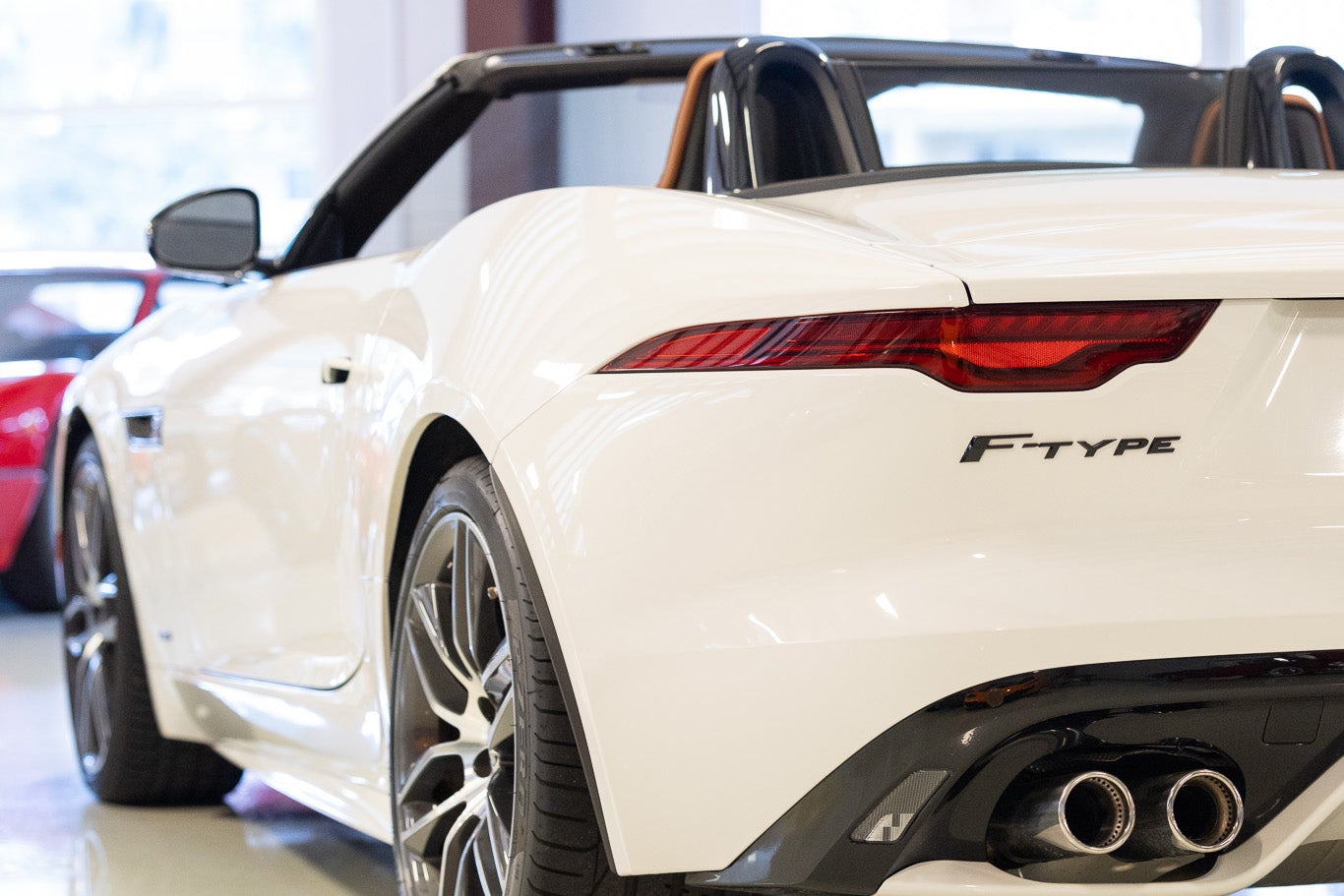
Jaguar F-TYPE Convertible
The emotional choice. The supercharged V8 makes a noise no German rival attempts, and it is less clinical and more of an event than anything from Stuttgart or Munich. The final-year F-TYPE 75 cars, sent off as V8-only, have already started attracting collector attention — unusual for a car this recent.
BMW M4 Convertible
Absurdly fast and more usable than a 911 for four people. Fabric roof, so lighter and simpler than the folding-hardtop generation it replaced.
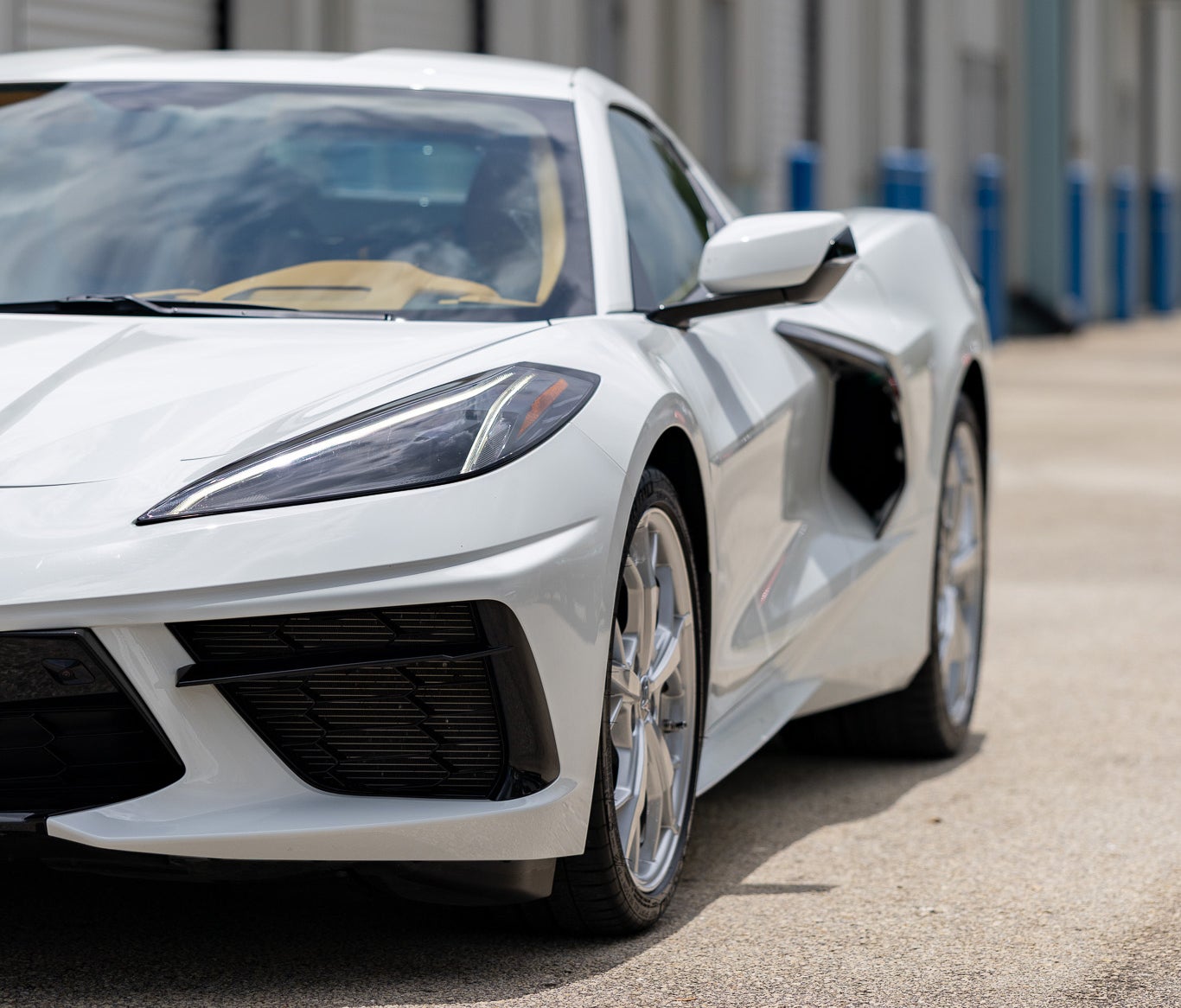
Chevrolet Corvette C8 Convertible
The value proposition of the entire segment. A retractable hardtop, genuine supercar pace, and a fraction of the price of the European cars it embarrasses. The cabin is not a Bentley's. It does not need to be.
If you want a supercar with the roof down
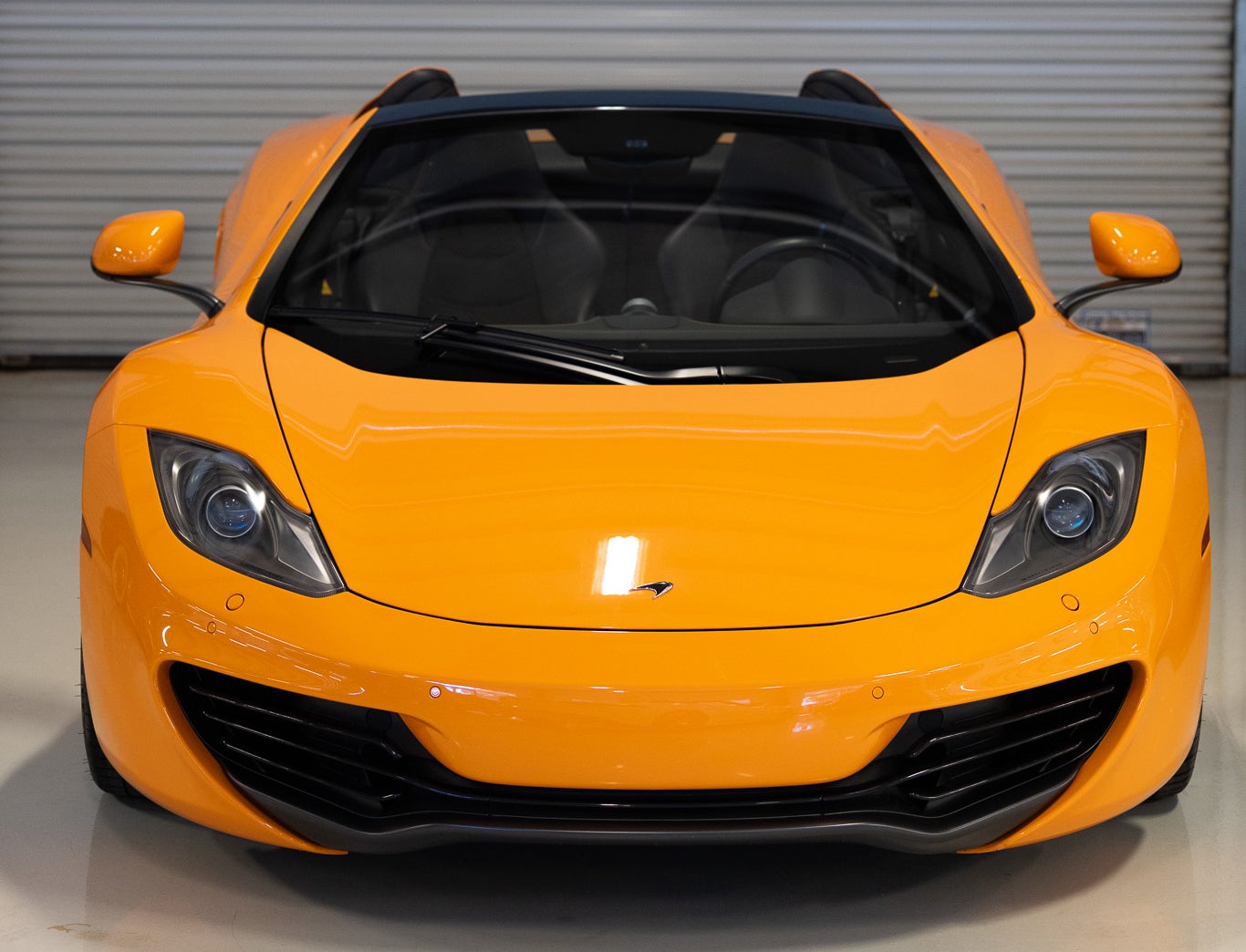
McLaren Spider
A McLaren with the roof down is a different experience from any front-engined convertible. The carbon tub means almost no structural compromise, and the engine sits directly behind your head. The MP4-12C was the car that established the modern McLaren and is now the most attainable way into the marque.
Ferrari 360 Spider
One of the last analogue Ferraris, and increasingly recognised as such. A naturally aspirated 3.6-litre V8 behind the seats, Pininfarina proportions, and a noise that has aged into something close to nostalgia. Modern classic status arrived quietly and looks permanent.
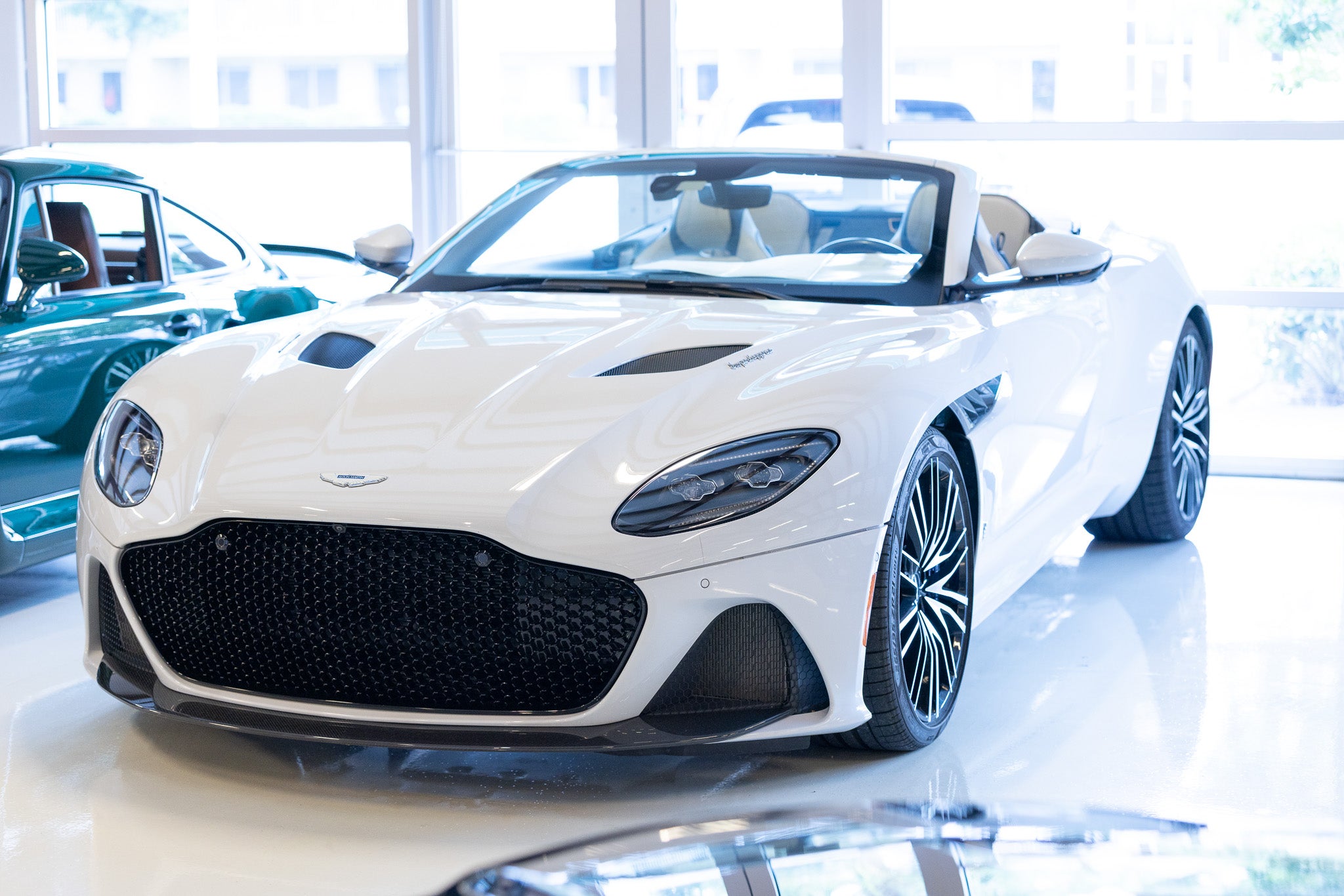
Aston Martin DBS Superleggera Volante
A 5.2-litre twin-turbo V12, a fabric roof to keep the profile right, and one of the great modern GT shapes.
And then there is the AR1
Occasionally a car turns up that does not belong in any category.
The Aston Martin AR1 — American Roadster One — is one of 99 ever built. Ours is number 12, with its original numbered plaque. Hand-built Zagato body, V12, six-speed manual, and hand-stitched leather from one specific breed of cattle.
It has no roof. Not a folding one, not a removable one. None.
"The lack of a roof is both its biggest drawback and one of its greatest selling points," Dan says. "That's what makes it a true roadster." In South Florida that is a real consideration, and it is also precisely the point. Although it is badged a 2003 Aston Martin, it looks nothing like anything else the marque built that year — its own body, its own presence, and with only 99 made, there will never be another run.
If you want a modern classic
Ford Thunderbird (2002–2005)
An unusual entry in a luxury guide, and a deliberate one. The retro Thunderbird was built for four model years in modest numbers and has quietly crossed from used car into collectible. Not fast, does not handle. That is not the point.
The two currently on our floor came from the same collector — a man who owned some extraordinary cars but had a particular affection for this generation, and kept two of them in different colours. That tells you something about how these are viewed now.
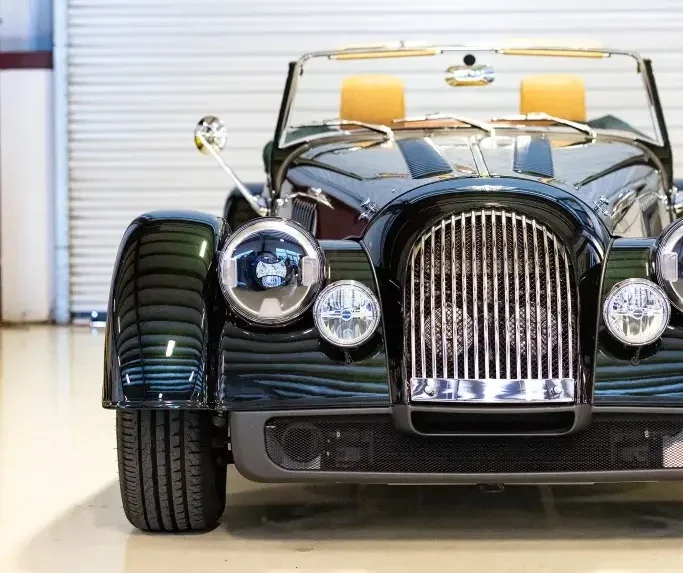
Morgan Plus Four
Almost nothing else on the road is built this way any more. Hand-assembled, wood-framed, and completely uninterested in what other manufacturers are doing. It is an acquired taste and the people who acquire it rarely go back.
If you want something likely to appreciate
Mercedes-Benz W111 Cabriolet
One of the most quietly beautiful cars Mercedes ever built, and among the most collectible convertibles of the post-war era. The 280 SE has the proportions, the engineering and the presence — and unlike much of the classic market, it remains genuinely usable on a modern road. This is a car bought on its file as much as on its paint.
Chevrolet Corvette, C2
The 1963–1967 Corvette is the most collectible American convertible of its era, and a first-year 1963 car carries particular significance.
What actually breaks on a convertible?
This is the part most buying guides skip, and it is where the real money is.
Roof mechanisms are the first thing we check. Every convertible that comes into inventory gets its roof operated during inspection — not glanced at, operated. "Those systems have a lot of moving parts," Dan explains, "and because the hardtop is much heavier than a fabric roof, there are additional hydraulic components that need to be checked."
The good news is that not every fault is expensive. "Sometimes the hydraulic reservoirs simply need to be refilled because they've lost pressure over time." A car that hesitates partway through its cycle is not automatically a car with a failed mechanism — but you need someone to look before you find out which it is.
Hydraulic suspension is not a roof problem but it lands on the same cars. Mercedes ABC and McLaren's hydraulic system are both superb when maintained and both capable of a bill exceeding the value of a cheaper convertible outright.
Soft top fabric and rear windows are consumables. Budget for replacement rather than being surprised by it, and factor in that a car stored outdoors in Florida will need it sooner.
Electronics age worst on cars from the mid-2000s onward, and convertibles carry more of them: roof position sensors, hydraulic pumps, rollover protection, wind deflectors.
The problem with a car that has barely been used
Here is the counterintuitive part, and we have a specific example.
We bought a Porsche Boxster from an older couple who mentioned, almost in passing, that they had put the top down twice in the entire time they owned it.
"Many convertibles rely on micro switches that need to be exercised regularly," Dan says. "Because the top had gone unused for so long, those switches had become inoperative." Replacing them solved it completely — an inexpensive fix, but one nobody would have found without running the roof through its cycle.
That is the lesson. Seals dry out, hydraulic fluid loses pressure, tyres age out regardless of tread, and switches that never move stop working. A convertible driven regularly and serviced on schedule is often a better buy than one that sat in a garage looking perfect. Mileage tells you less in this segment than almost any other.
What should you inspect before buying?
Beyond the roof cycle, look for water — because the damage shows up away from the leak:
- Lift the carpet at the footwells and check the underlayment, not the surface
- Look at seat rails and seatbelt anchors for corrosion
- Check the trunk floor and spare well for staining or a tide line
- Smell the interior closed up. Mildew does not hide well
- Find the roof drainage channels and confirm they are clear. Blocked drains cause most convertible water damage and are trivial to clean if anyone bothers
On a fabric roof, examine the material where it creases, the stitching, and the clarity of the rear window. On a folding hardtop, the mechanism and its hydraulics are the expensive part.
Hardtop or soft top?
Both work; the trade-off is complexity against simplicity.
A retractable hardtop gives you better insulation, better security, less noise, and a roof that will not degrade in sunlight. The cost is a complex mechanism that is expensive when it needs attention.
A soft top is lighter, simpler, cheaper to replace outright, and usually better for trunk space and proportions. The cost is that fabric is a consumable, particularly in strong sun.
Worth knowing that the market has an opinion here. The 2020-and-earlier hardtop SLs remain the most sought-after, and a 2022 SL with the newer soft top sat on our floor for months. Though in fairness, Dan points out, it was also bright school-bus yellow — "you could practically see it from space." It found the right buyer eventually. A gentleman arrived driving a blue BMW sedan and left in the yellow Mercedes.
Everyone's taste is different, which is most of what makes this business interesting.
What does Florida do to a convertible?
Sun and humidity age a convertible faster than mileage does, and salt air accelerates everything.
Ultraviolet exposure is the main enemy of a fabric roof. A soft top that has lived outdoors here for a decade shows it in the material and in the rear window, which clouds and eventually cracks. Interiors suffer too — dashboards, leather, and any trim exposed with the roof down.
Humidity works from the inside. A car that gets damp and never fully dries develops mildew in the carpet underlayment and corrosion at the seat rails. This is why the blocked-drain check matters so much in this climate.
Salt air affects anything within a few miles of the water: undercarriage, brake and fuel lines, suspension hardware, unprotected fasteners.
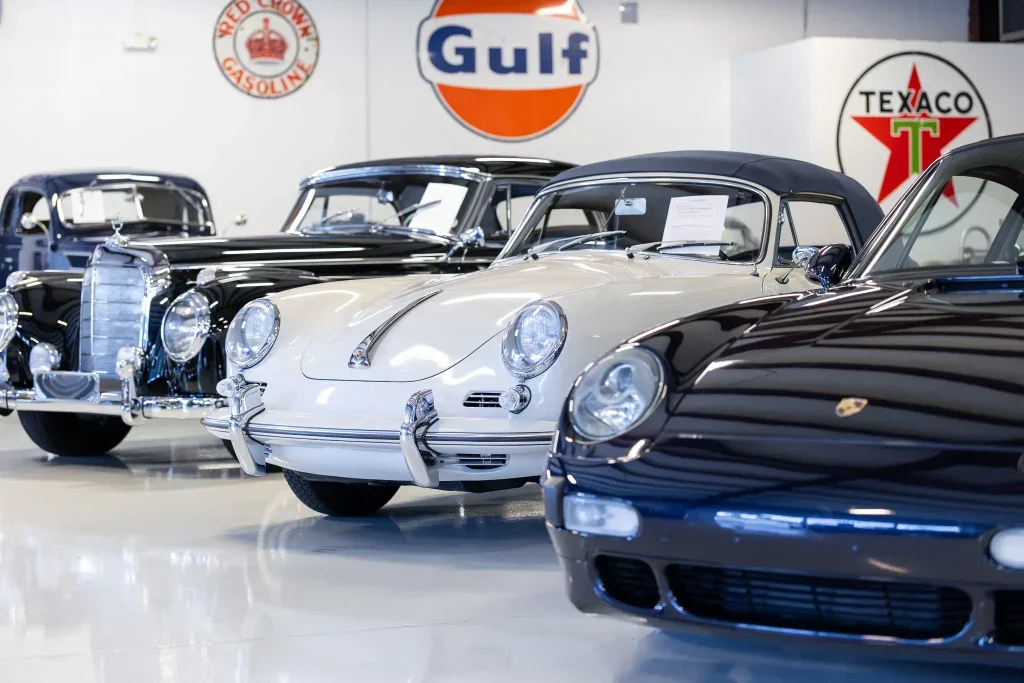
None of this argues against owning a convertible here — Florida is the best place in the country for it, and the season runs October through April. But it does mean where a car spent its life matters more than the odometer. Our cars are kept indoors in a climate-controlled showroom, which in this state is preservation rather than luxury.
Can you buy from out of state, or from overseas?
Yes, and we do it regularly. Transport is arranged by the buyer, and we are happy to point you toward companies we trust.
That is worth being clear about, because it is different from how a volume dealership works. You buy the car; you choose who moves it. Most buyers at this level have a preference already, and for those who do not, we will make recommendations.
International sales work the same way, with the buyer handling customs, import and export requirements and port arrangements. Most international buyers have done it before, and many work through professional brokers — a Ferrari that ended up in Brazil was handled through a broker based in Miami, and the process was straightforward from our side.
The most memorable was a completely original 1931 Ford Model A convertible, sold on Bring a Trailer to a gentleman in Switzerland. He runs a tour bus company, and the property where his tours begin has extensive gardens. He wanted the Model A to give visitors rides around the grounds.
What makes remote buying work is documentation — detailed photography, video of the roof through its full cycle, undercarriage images, and specific answers to specific questions.
What we look for before a car reaches the floor
Our standard is narrow on purpose: low mileage, a clean Carfax, and no dents, dings or scratches. "If a car is sitting in our showroom, it's ready to go and needs nothing."
Asked which car on the floor is the best buy right now, and whether any are overrated, Dan declines the second half of the question. "I wouldn't call any of them overrated. The collector car market moves in trends. Certain makes, models or eras become popular for a while and then cool off before eventually becoming desirable again."
Which is a more useful answer than a ranking. A 2002 Thunderbird and a fully restored 300 SL are not competing with each other — different cars, different price points, different buyers entirely. The question is not which is best. It is which one is yours.
Frequently asked questions
Are used convertibles reliable?
As reliable as the equivalent coupe, plus the roof mechanism. Buy on documented service history rather than mileage and most of the risk disappears.
What is the best used luxury convertible?
It depends what you want. For a car you can use constantly, a Mercedes-Benz SL. For driving, a Porsche 911 Cabriolet. For drama, a McLaren Spider or a Ferrari Spider. For value, a Corvette C8. For appreciation, a documented classic.
How long does a convertible top last?
A fabric top typically lasts eight to twelve years. Strong sun shortens that considerably; garaging extends it well beyond. A folding hardtop does not wear out the same way, but its mechanism needs periodic service.
Should I worry about a convertible with very low mileage?
Look at it closely rather than treating it as a bonus. Seals dry, fluids lose pressure, and switches that never move stop working. A car driven regularly and serviced on schedule is often the better buy.
Do you ship cars to buyers out of state?
Buyers arrange and pay for transport, and we are glad to recommend companies we trust. International buyers handle customs and import requirements, usually through a broker.
With thanks to Dan Magee, Sales Consultant at Rosner Motorsports, for the inspection detail and the stories throughout this guide.
Browse our current selection of pre-owned luxury convertibles, or call us. If you are after something specific we do not have on the floor, we can usually find it.