Blog

Porsche 911 Targa vs. Cabriolet: Which Open 911 Should You Buy?

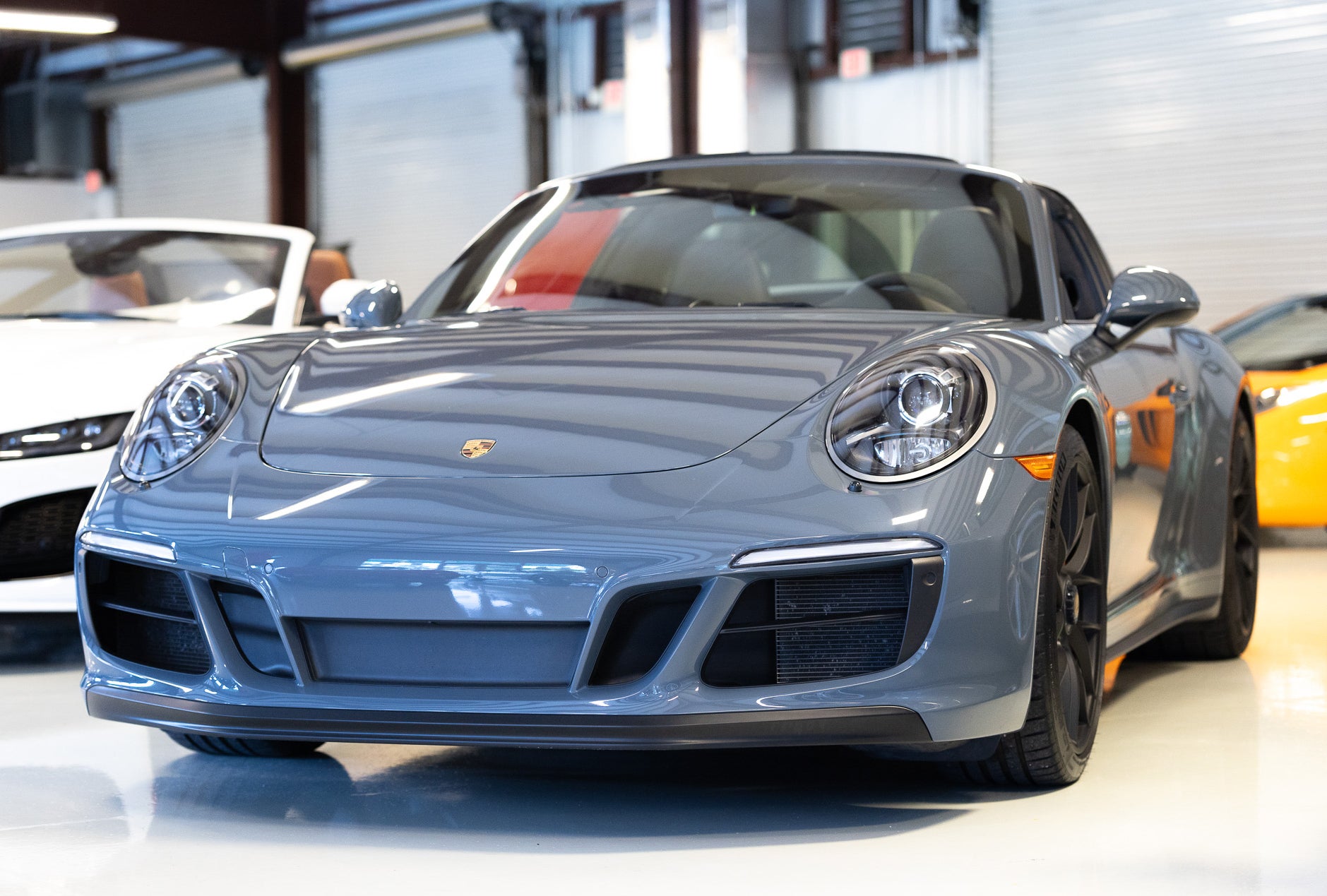
Graphite Blue 2018 Porsche 911 Targa 4 GTS with its Targa bar, in the Rosner Motorsports showroom

There are two ways to take the roof off a modern Porsche 911, and they are more different than the brochures suggest. The Cabriolet folds a fabric roof away behind the rear seats. The Targa lifts a panel from above your head and stows it beneath a sweeping rear window, while a brushed bar stays exactly where it has been since 1965.

We have had the chance to compare two 911 Targa 4 GTS cars side by side, one from each of the last two generations, and what follows draws on both. It covers what separates the Targa from the Cabriolet, what separates the 991.2 from the 992, and what to check before you buy either.

What is a Porsche 911 Targa?

A Targa is a 911 with a removable roof panel and a fixed roll bar: an open car that keeps the silhouette of a coupe.

Porsche introduced it at the 1965 Frankfurt show, at a moment when American safety regulators looked likely to outlaw the full convertible. The fixed hoop was Porsche’s answer, delivering open-air driving with rollover protection built into the structure. The name came from the Targa Florio, the Sicilian road race Porsche had already won several times.

The idea has changed shape since. From the 993 through the 997, a Targa meant a large sliding glass roof and no bar at all. The 991 generation brought the bar back for the 2014 model year, this time with a fully automated roof: the rear window lifts and tilts away, the roof panel folds beneath it, and everything returns to place at the press of a button. The 992 refined the same design. In both generations the Targa is all-wheel drive only, which is why every modern example carries a 4 in its name.

Targa vs. Cabriolet: what is the difference?

The Cabriolet is the more open car. The Targa is the more complete one.

With the roof down, a Cabriolet is open above and behind you, with the full sky overhead and the engine note arriving unfiltered. A Targa opens only above the front seats. You get light, air and sound, but far less buffeting, and the cabin stays calmer at highway speed. Some buyers find that a compromise; others find it is exactly the version of open-top driving they will actually use every day.

Operation is the most practical difference. A Cabriolet roof opens in a matter of seconds and, on the current car, can be operated on the move at low speed. The Targa mechanism takes longer, requires the car to be stationary, and needs clear space behind the car while the rear window swings up and back. If you like to drop the roof at a traffic light, buy the Cabriolet. If you open it once at the start of a drive and leave it, the distinction disappears.

Then there is the shape. Roof up, a modern Cabriolet looks closer to a coupe than any open 911 before it, but the Targa’s profile, with its bar and wraparound rear glass, is its own design, and for many people the most handsome 911 of all. It is also the rarer body style. Porsche builds far fewer Targas than Cabriolets, and the Targa is limited to all-wheel drive, whereas the Cabriolet is offered with either rear- or all-wheel drive.

Florida adds one consideration the brochures do not. A Targa with its panel removed lets air into the cabin without exposing the whole interior to midday sun, which in this climate is not a small thing. A Cabriolet rewards evenings and winter mornings; a Targa is more forgiving at noon in July.

What does GTS mean on a 911?

GTS is the specification an enthusiast would have ordered anyway, bundled together at a price that makes the individual options look expensive.

It sits between the Carrera S and the GT and Turbo cars. The GTS brings more power than the S, Sport Chrono and a sport exhaust as standard, lowered adaptive suspension, center-lock wheels, and an interior trimmed heavily in Alcantara or Race-Tex. On the 991.2 the GTS engine produces 450 horsepower; on the 992 it produces 473. Both use Porsche’s twin-turbocharged 3.0-liter flat-six.

For a used buyer, the appeal is that most of what you would want on a 911 is already there, and the GTS badge tends to be easier to resell than a Carrera with a long and idiosyncratic options list.

Should you buy a 991.2 or a 992?

The 991.2 is the more compact, more analogue-feeling car. The 992 is the more refined and more modern one. Neither is the wrong answer.

The 991.2 covers the 2017 to 2019 model years and was the first generation in which every Carrera was turbocharged. Its cabin is traditional in the best sense, with a large central tachometer flanked by conventional gauges and physical switchgear that falls easily to hand. It has also absorbed more depreciation, which makes it the stronger value of the two.

The 992 arrived for 2020, with the Targa following for 2021 and the GTS joining the line shortly after. Every 992 uses the wide body, the cabin is more digital, the infotainment is a generation newer, and the car feels more planted and more insulated at speed. Some drivers miss a little of the 991’s intimacy; most simply notice that it is better at everything.

The practical question is less which generation is better than how you intend to use the car. A buyer who wants a 911 to drive regularly, without worrying about every mile, will find the 991.2 hard to argue with. A buyer who wants the newest car available, in as close to delivery-mileage condition as possible, will lean toward the 992.

Two Targa 4 GTS cars, side by side

2018 Porsche 911 Targa 4 GTS

Ours came to us in Graphite Blue Metallic over black, with the GTS Alcantara package, 18-way Adaptive Sport Seats Plus, Power Steering Plus, Lane Change Assist, and the Sport Chrono clock and instrument dials finished in Guards Red. It rode on the 20-inch center-lock Turbo S wheels and showed roughly 40,700 miles, with a clean Carfax.

That mileage is a feature rather than a footnote. As we explain in our convertible buying guide, a car that has been driven and serviced regularly is often a better buy than one that has sat, because seals, switches and roof mechanisms all suffer from disuse. It was a 911 that had been used as intended.

2022 Porsche 911 Targa 4 GTS

The 2022 came to us in GT Silver Metallic over black, from a single owner, with fewer than 2,000 miles and a clean Carfax. Its specification included the Premium Package, sport exhaust with silver tailpipes, ventilated front seats, matte carbon interior trim, and the Targa bar itself finished in silver, the classic choice. It sat on 20- and 21-inch Turbo S wheels in satin black.

It was, in effect, a new car on which someone else had already absorbed the first owner’s depreciation.

What should you check on a used 911 Targa?

The Targa roof is the most elaborate mechanism Porsche fits to a 911. It is reliable when maintained and worth inspecting carefully regardless.

Run the roof through its full cycle several times with the car stationary and level. It should move smoothly and at a consistent pace, without hesitation, and the panel should seat evenly with no visible gaps. Slow or uneven operation can point to a weak battery, a sensor, or an alignment problem, and the cause should be identified before purchase rather than after.

Then look for water. Targa roofs drain through channels and tubes built into the roof frame, and when those block or the seals shrink with age, water finds its way onto door trims and seats. Check the edges of the headliner, the tops of the door cards, and the seat bolsters for staining, and ask whether the seals have ever been replaced. Seals are an age-related item, and in strong sun they age faster.

Finally, drive it at highway speed with the roof closed and listen. Some wind noise is normal; whistling or rattling from the roof edges usually means a seal or adjustment issue.

Beyond the roof, the checks are the same as for any modern 911: a complete service history, the age of the tires regardless of tread, brake condition relative to mileage, and on a recent car, how much of the original factory warranty remains, which depends on the date it was first placed in service.

Frequently asked questions

Is a Porsche 911 Targa a convertible?

In the sense that the roof comes off, yes. Structurally it is a distinct body style, with a fixed roll bar and a glass rear window that set it apart from the fabric-roofed Cabriolet.

Is the Targa or the Cabriolet the better buy?

It depends on how you want the car to feel open. The Cabriolet gives you more sky and more sound. The Targa gives you a calmer cabin, the more distinctive shape, and the rarer car.

Can you open a 911 Targa roof while driving?

No. The car must be stationary, with clear space behind it while the rear window moves. The Cabriolet roof on current models can be operated at low speed.

Do Targa roofs leak?

A healthy Targa should not. Leaks almost always trace back to blocked drains or aged seals, both of which are straightforward to inspect before purchase.

Are all modern 911 Targas all-wheel drive?

Yes. Every 991 and 992 Targa is all-wheel drive, which is why they are badged Targa 4, Targa 4S or Targa 4 GTS.

With thanks to Dan Magee, Sales Consultant at Rosner Motorsports.

Browse our current Porsche inventory, or read our broader guide, Best Used Luxury Convertibles: What to Know Before You Buy. If you are looking for a particular 911 we do not have on the floor, call us. We can usually find it.
Recommended Posts

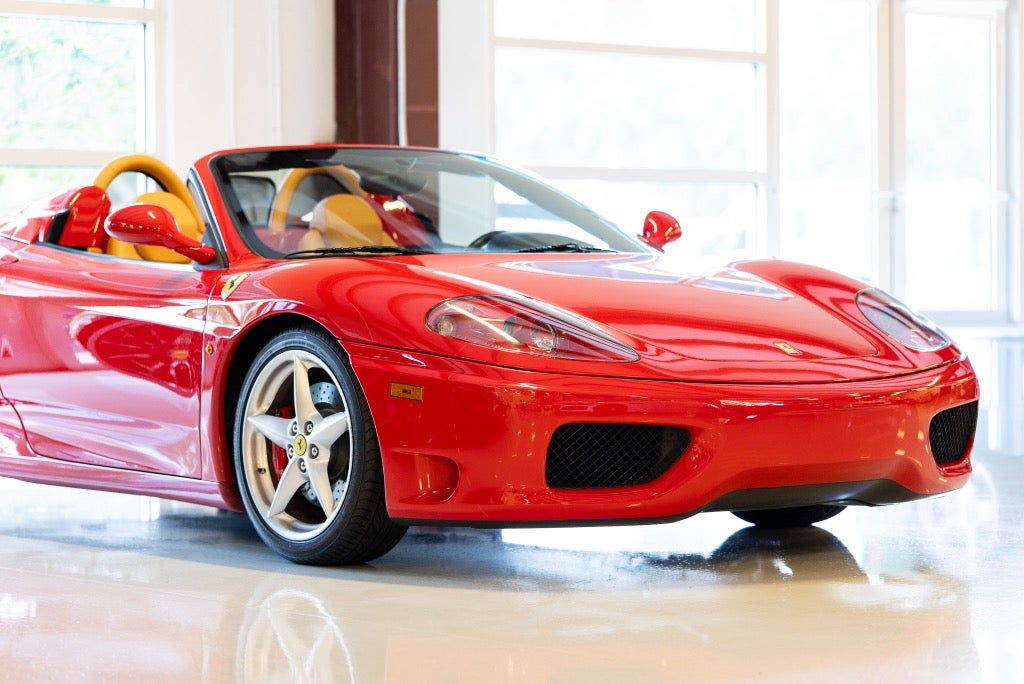
Red Ferrari 360 Spider with its soft top folded in the Rosner Motorsports showroom

What Actually Breaks on a Convertible? Roof Mechanisms, Hydraulics and Real Costs

Every convertible buying guide tells you to inspect the roof. Almost none tell you what you are looking for, what fails, or what it costs when it does. That gap is where buyers lose money. This guide goes system by system through the parts of an open car that a coupe simply does not have, using convertibles that have come through our showroom as examples. The cost ranges are typical figures for independent specialist work at the time of writing; dealer pricing usually runs higher, and every car deserves its own quote. Why do convertibles have more to go wrong? Because a convertible carries three systems a coupe does not: the roof mechanism, the sealing and drainage around it, and the sensors and modules that coordinate the two. None of these is inherently fragile. Manufacturers engineer them to last for many years. But each adds parts that move, seal or switch, and each ages according to time and climate as much as mileage. A folding hardtop adds a further layer, because a heavier roof needs more substantial hydraulics to move it. Mercedes-Benz SL: the Vario roof The SL’s folding hardtop is the most useful roof in any convertible, and it is also the most complex. It is also the convertible we sell more of than almost any other, across two generations: the R230 of 2003 to 2012 and the R231 that followed it. The roof is driven by a hydraulic pump in the trunk feeding a series of cylinders, with microswitches and position sensors confirming each stage before the next begins. When something goes wrong, it almost always falls into one of four categories. The hydraulic fluid level drops over time and the roof slows or stops. A cylinder begins to leak, often leaving fluid on the headliner, parcel shelf or trunk lining. A microswitch or sensor fails and the sequence halts partway. Less often, the pump itself fails. The first is the most common and the least alarming. “Sometimes the hydraulic reservoirs simply need to be refilled because they’ve lost pressure over time,” says Dan Magee, a sales consultant at Rosner Motorsports. A top-up and bleed is typically a few hundred dollars. A single leaking cylinder usually runs from several hundred to around fifteen hundred dollars installed, depending on which one and how much trim has to come out. Multiple cylinders or a pump can climb to several thousand. One detail catches out buyers on test drives: the SL roof will not operate unless the trunk partition is correctly in place. A roof that refuses to move is not always a roof that is broken. Active Body Control: the system that lives on the same cars ABC is not part of the roof, but it is the single most important thing to understand before buying an SL 63. Active Body Control is Mercedes’ hydraulic suspension, using high-pressure fluid at each corner to hold the car flat through corners and keep the ride composed. It is standard on the SL 63 in both generations, and optional on the R231 SL 400, so the build sheet is worth checking. When healthy, it is remarkable. When neglected, it is expensive. The system ages through its struts, its high-pressure lines, its pump, and the valve blocks and accumulators that manage pressure. The warning signs are a car sitting noticeably low at one corner after standing overnight, an ABC message on the dash, or fluid seepage around the wheels. A fluid flush and bleed is a routine, modest job. A single line or strut typically runs from one to three thousand dollars. Multiple struts or a pump can reach five thousand and beyond. Some owners respond to a large ABC bill by converting the car to conventional coilovers. That solves the cost and changes the car, both in how it drives and in how a future buyer will value it. The better route is to buy an example on which the system has been maintained and documented. Porsche 911 Targa: the roof that moves the rear window The modern Targa mechanism lifts the rear window, folds the roof panel beneath it, and sets everything back in place. It is reliable when maintained, and we look at it in detail in our 911 Targa vs. Cabriolet guide. The faults that do appear are mostly about alignment and water: a roof that moves slowly or unevenly, seals that have shrunk with age, and drain tubes in the roof frame that block and send water onto door trims and seats. Clearing drains is a minor job. Replacing seals frequently runs to four figures, because parts of the roof assembly must come apart to fit them. Ferrari California T: a folding hardtop at Ferrari rates The California T uses a two-piece retractable hardtop, hydraulically operated, which gives it the same broad character as the SL: a proper coupe with the roof up, a convertible with it down. The categories of fault are the same as well, from fluid and seals to sensors and alignment. What changes is the price of putting them right. Ferrari parts and specialist labor rates mean that the same class of fault costs considerably more than on a Mercedes, which makes a documented service history and a full roof cycle during inspection even more important. Soft tops: fabric, frame and rear window A fabric roof is simpler than a folding hardtop, and it is also a consumable. The soft-top cars that come through our showroom range from the MINI Convertible John Cooper Works and the Volkswagen Beetle Convertible to the retro Ford Thunderbird. On all of them, the fabric itself is the part that wears. Ultraviolet light breaks down the material and the stitching, rear windows cloud or separate from the fabric around them, and the frame’s pivots and motors wear with use. Replacement costs vary enormously by car. A quality top for a MINI or Beetle typically falls between one and two and a half thousand dollars installed. A factory-specification top for a Porsche or a premium German convertible commonly runs from three thousand to well beyond. Switches, sensors and batteries Many convertible roof faults are electrical rather than mechanical, and some of the most common are also the cheapest. A weak battery is the first suspect when a roof hesitates, particularly on a car that sits. Roof sequences draw significant current and many control modules refuse to run them below a certain voltage. Position sensors and microswitches are the next. As we described in our convertible buying guide, we once bought a Porsche Boxster whose owners had lowered the top only twice; its microswitches had stopped working simply from disuse. Replacing them was inexpensive. Finding the cause required running the roof through its cycle. Water: the expensive failure that is not mechanical The costliest convertible repairs often begin with a blocked drain. Every convertible channels water away through drains around the roof and body. When those drains clog with debris, water collects and overflows into footwells and trunks, which is precisely where many cars keep their control modules, wiring and, on the SL, the roof pump. Clearing a drain costs almost nothing. Replacing the electronics that a flooded footwell has damaged can cost thousands. This is why we check under the carpet rather than on it, and why a convertible that has lived outdoors in a humid climate deserves a closer look than its mileage alone would suggest. How to check a convertible roof before you buy Operate the roof through its full cycle at least twice, with the car stationary and the engine running. It should move smoothly and at a consistent pace. Watch and listen for hesitation, uneven movement between sides, or grinding and whining from the pump. Look for hydraulic fluid on the headliner, parcel shelf and trunk lining, and around the wheels on cars with hydraulic suspension. Lift the carpet in the footwells and trunk and check the underlayment for damp or staining. Find the drain channels and confirm they are clear. Ask for records of roof servicing, hydraulic fluid changes and, on an SL 63, the ABC system. For a buyer purchasing remotely, a video of the roof completing its full cycle, filmed from outside the car, is worth more than any number of still photographs. How we approach it Every convertible that comes into our inventory has its roof operated during inspection. “Those systems have a lot of moving parts,” Dan says, “and because the hardtop is much heavier than a fabric roof, there are additional hydraulic components that need to be checked.” Our standard is that a car on the showroom floor is ready to go and needs nothing, and the roof is part of that standard rather than an exception to it. Frequently asked questions How much does convertible roof repair cost? Anywhere from a few hundred dollars for a fluid top-up or a switch to several thousand for hydraulic cylinders, a pump, or a factory soft top. The make, the roof type and whether the work goes to a dealer or an independent specialist all move the figure considerably. Are folding hardtops less reliable than soft tops? They have more components and heavier hydraulics, so there is more that can fail and repairs can cost more. In exchange, the roof itself does not wear out the way fabric does. A well-maintained folding hardtop is not a liability. Why does my convertible roof stop halfway? Most often low hydraulic fluid, a weak battery, a failed position sensor or microswitch, or, on an SL, a trunk partition that is not in place. Each is identifiable before it becomes expensive. How often should you operate a convertible roof? Regularly, even in the off-season. Seals, switches and hydraulics all deteriorate faster through disuse than through normal operation. Does Active Body Control make an SL 63 a bad buy? No. It makes service history essential. A documented, well-maintained ABC system is one of the finest suspension systems ever fitted to a road car. With thanks to Dan Magee, Sales Consultant at Rosner Motorsports, for the inspection detail throughout. Browse our current selection of pre-owned luxury convertibles, or read our full guide, Best Used Luxury Convertibles: What to Know Before You Buy. If you have questions about a specific car, call us. We would rather answer them before you buy than after.

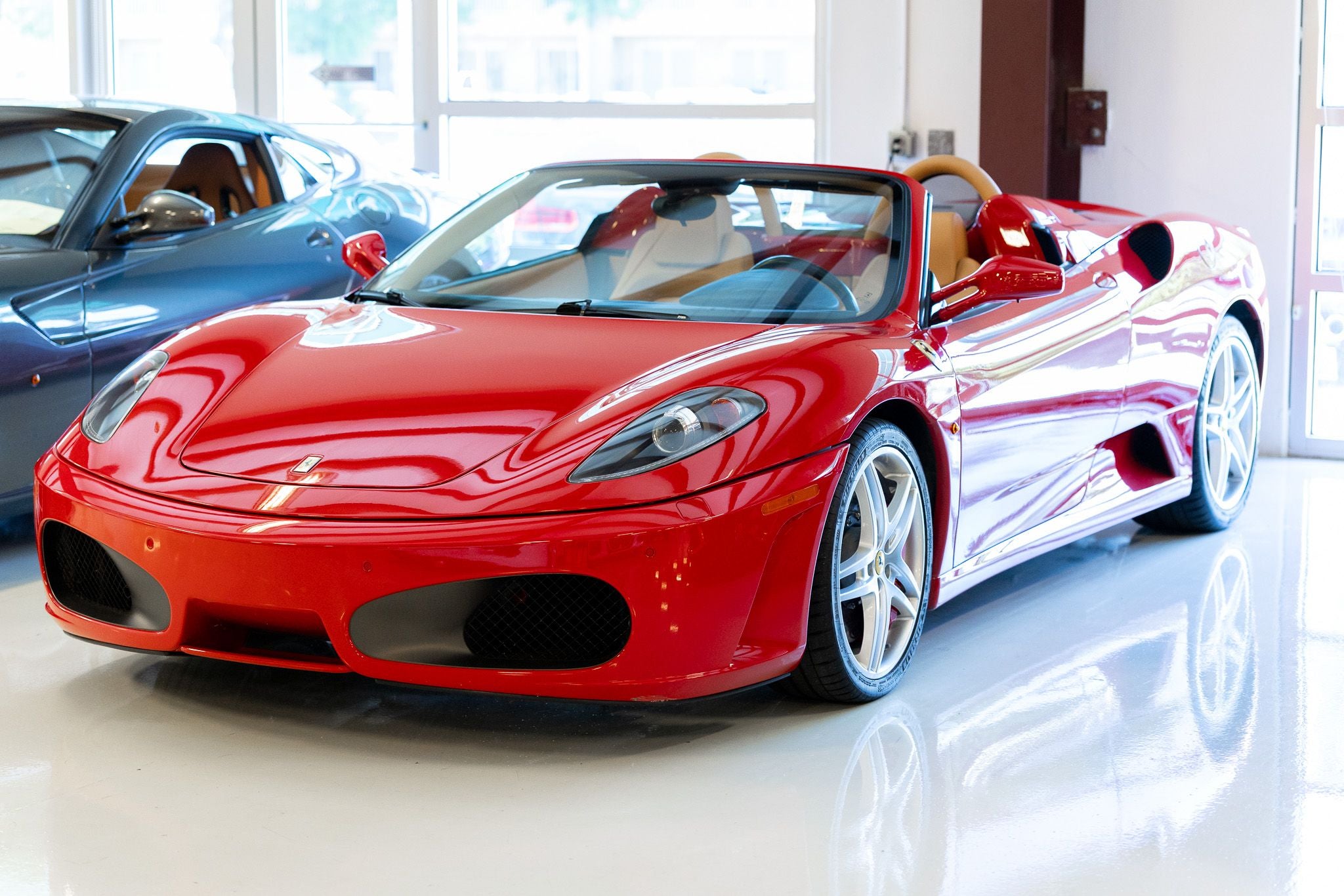
Red 2008 Ferrari F430 Spider with the top down in the Rosner Motorsports showroom

Best Used Luxury Convertibles: What to Know Before You Buy

A convertible is almost never anybody's only car, and almost never a rational purchase. That is exactly why the used market treats them the way it does. Discretionary cars fall harder and faster than the sedans and SUVs people buy because they have to — and the more expensive the car, the more brutal the arithmetic. A grand tourer that cost a quarter of a million dollars new can sit at a fraction of that a decade later. The car did not get worse. The market moved on to the next one. What follows is organized by what you actually want from a convertible rather than by price, along with what we have learned checking these cars before they reach our floor. Why does buying a used luxury convertible make sense? Because convertibles depreciate faster than the equivalent coupe, and they do it without getting worse to drive. The steepest part of the curve is the first three to six years. Buy after it flattens and the original owner has absorbed the expensive part on your behalf. In a segment where the appeal is emotional rather than practical, the gap between what a car cost and what it is worth is unusually wide. There is a second, quieter advantage. Convertibles tend to be second or third cars, so they tend to be driven less and stored better. A fifteen-year-old convertible with 40,000 miles is common. A fifteen-year-old sedan with 40,000 miles is not. The catch is that low mileage cuts both ways, and we will come back to that with a specific example. What are the best used luxury convertibles? If you want a grand tourer you can genuinely use Mercedes-Benz SL The SL has been Mercedes' answer to this question for sixty years, and the folding hardtop is the single most useful piece of engineering in any convertible: a quiet, secure, properly insulated coupe with the roof up, and a real convertible ninety seconds later. It is also the model we sell most of. "We sell more Mercedes-Benz SLs than almost any other model," says Dan Magee, a sales consultant at Rosner Motorsports, "and the 2020-and-earlier hardtop cars continue to be the most desirable." Asked why Mercedes moved away from the retractable hardtop, his answer is short: "That's really a question for Mercedes. Personally, I wish they hadn't." The R230 generation, particularly in SL 63 AMG form, is the current value sweet spot. Its naturally aspirated 6.2-liter V8 is one of the great modern Mercedes engines — no turbochargers, a hard edge to the noise, and a character later forced-induction AMGs never quite recovered. What to watch: the roof hydraulics, and Active Body Control. ABC is superb when healthy and genuinely costly when not. A documented service history is worth paying real money for. Bentley Azure Coachbuilt, hand-finished, and vastly expensive new. The Azure depreciated dramatically, stopped, and the best examples have been climbing for some time. The 6.75-liter turbocharged V8 is a piece of engineering history. Maintenance costs bear no relation to purchase price, which is why buying the cheapest example available is usually the most expensive decision you can make. If you want a driver's car Porsche 911 Cabriolet The 911 is the rare convertible that loses very little in becoming one. Chassis rigidity is excellent, the roof mechanism is among the best-engineered in the business, and the driving experience survives the conversion largely intact. The Carrera 4 GTS is arguably the sweet spot of the modern range: most of the GT-car hardware, all-wheel-drive traction, and a specification that reads as deliberate rather than optional-box-ticked. Its sibling, the 911 Targa, keeps a fixed roll bar and a removable roof panel, a different way to open a 911 that we compare in Porsche 911 Targa vs. Cabriolet: Which Open 911 Should You Buy? Jaguar F-TYPE Convertible The emotional choice. The supercharged V8 makes a noise no German rival attempts, and it is less clinical and more of an event than anything from Stuttgart or Munich. The final-year F-TYPE 75 cars, sent off as V8-only, have already started attracting collector attention — unusual for a car this recent. BMW M4 Convertible Absurdly fast and more usable than a 911 for four people. Fabric roof, so lighter and simpler than the folding-hardtop generation it replaced. Chevrolet Corvette C8 Convertible The value proposition of the entire segment. A retractable hardtop, genuine supercar pace, and a fraction of the price of the European cars it embarrasses. The cabin is not a Bentley's. It does not need to be. If you want a supercar with the roof down McLaren Spider A McLaren with the roof down is a different experience from any front-engined convertible. The carbon tub means almost no structural compromise, and the engine sits directly behind your head. The MP4-12C was the car that established the modern McLaren and is now the most attainable way into the marque. Ferrari 360 Spider One of the last analog Ferraris, and increasingly recognised as such. A naturally aspirated 3.6-liter V8 behind the seats, Pininfarina proportions, and a noise that has aged into something close to nostalgia. Modern classic status arrived quietly and looks permanent. Aston Martin DBS Superleggera Volante A 5.2-liter twin-turbo V12, a fabric roof to keep the profile right, and one of the great modern GT shapes. And then there is the AR1 Occasionally a car turns up that does not belong in any category. The Aston Martin AR1 — American Roadster One — is one of 99 ever built. The example we have offered is number 12, with its original numbered plaque. Hand-built Zagato body, V12, six-speed manual, and hand-stitched leather from one specific breed of cattle. It has no roof. Not a folding one, not a removable one. None. "The lack of a roof is both its biggest drawback and one of its greatest selling points," Dan says. "That's what makes it a true roadster." In South Florida that is a real consideration, and it is also precisely the point. Although it is badged a 2003 Aston Martin, it looks nothing like anything else the marque built that year — its own body, its own presence, and with only 99 made, there will never be another run. If you want a modern classic Ford Thunderbird (2002–2005) An unusual entry in a luxury guide, and a deliberate one. The retro Thunderbird was built for four model years in modest numbers and has quietly crossed from used car into collectible. Not fast, does not handle. That is not the point. Two that came to us from the same collector make the point — a man who owned some extraordinary cars but had a particular affection for this generation, and kept two of them in different colors. That tells you something about how these are viewed now. Morgan Plus Four Almost nothing else on the road is built this way any more. Hand-assembled, wood-framed, and completely uninterested in what other manufacturers are doing. It is an acquired taste and the people who acquire it rarely go back. If you want something likely to appreciate Mercedes-Benz W111 Cabriolet One of the most quietly beautiful cars Mercedes ever built, and among the most collectible convertibles of the post-war era. The 280 SE has the proportions, the engineering and the presence — and unlike much of the classic market, it remains genuinely usable on a modern road. This is a car bought on its file as much as on its paint. Chevrolet Corvette, C2 The 1963–1967 Corvette is the most collectible American convertible of its era, and a first-year 1963 car carries particular significance. What actually breaks on a convertible? This is the part most buying guides skip, and it is where the real money is. Roof mechanisms are the first thing we check. Every convertible that comes into inventory gets its roof operated during inspection — not glanced at, operated. "Those systems have a lot of moving parts," Dan explains, "and because the hardtop is much heavier than a fabric roof, there are additional hydraulic components that need to be checked." The good news is that not every fault is expensive. "Sometimes the hydraulic reservoirs simply need to be refilled because they've lost pressure over time." A car that hesitates partway through its cycle is not automatically a car with a failed mechanism — but you need someone to look before you find out which it is. Hydraulic suspension is not a roof problem but it lands on the same cars. Mercedes ABC and McLaren's hydraulic system are both superb when maintained and both capable of a bill exceeding the value of a cheaper convertible outright. Soft top fabric and rear windows are consumables. Budget for replacement rather than being surprised by it, and factor in that a car stored outdoors in Florida will need it sooner. Electronics age worst on cars from the mid-2000s onward, and convertibles carry more of them: roof position sensors, hydraulic pumps, rollover protection, wind deflectors. For model-by-model detail, warning signs and realistic repair costs, see What Actually Breaks on a Convertible? Roof Mechanisms, Hydraulics and Real Costs. The problem with a car that has barely been used Here is the counterintuitive part, and we have a specific example. We bought a Porsche Boxster from an older couple who mentioned, almost in passing, that they had put the top down twice in the entire time they owned it. "Many convertibles rely on micro switches that need to be exercised regularly," Dan says. "Because the top had gone unused for so long, those switches had become inoperative." Replacing them solved it completely — an inexpensive fix, but one nobody would have found without running the roof through its cycle. That is the lesson. Seals dry out, hydraulic fluid loses pressure, tires age out regardless of tread, and switches that never move stop working. A convertible driven regularly and serviced on schedule is often a better buy than one that sat in a garage looking perfect. Mileage tells you less in this segment than almost any other. What should you inspect before buying? Beyond the roof cycle, look for water — because the damage shows up away from the leak: Lift the carpet at the footwells and check the underlayment, not the surface Look at seat rails and seatbelt anchors for corrosion Check the trunk floor and spare well for staining or a tide line Smell the interior closed up. Mildew does not hide well Find the roof drainage channels and confirm they are clear. Blocked drains cause most convertible water damage and are trivial to clean if anyone bothers On a fabric roof, examine the material where it creases, the stitching, and the clarity of the rear window. On a folding hardtop, the mechanism and its hydraulics are the expensive part. Hardtop or soft top? Both work; the trade-off is complexity against simplicity. A retractable hardtop gives you better insulation, better security, less noise, and a roof that will not degrade in sunlight. The cost is a complex mechanism that is expensive when it needs attention. A soft top is lighter, simpler, cheaper to replace outright, and usually better for trunk space and proportions. The cost is that fabric is a consumable, particularly in strong sun. Worth knowing that the market has an opinion here. The 2020-and-earlier hardtop SLs remain the most sought-after, and a 2022 SL with the newer soft top sat on our floor for months. Though in fairness, Dan points out, it was also bright school-bus yellow — "you could practically see it from space." It found the right buyer eventually. A gentleman arrived driving a blue BMW sedan and left in the yellow Mercedes. Everyone's taste is different, which is most of what makes this business interesting. What does Florida do to a convertible? Sun and humidity age a convertible faster than mileage does, and salt air accelerates everything. Ultraviolet exposure is the main enemy of a fabric roof. A soft top that has lived outdoors here for a decade shows it in the material and in the rear window, which clouds and eventually cracks. Interiors suffer too — dashboards, leather, and any trim exposed with the roof down. Humidity works from the inside. A car that gets damp and never fully dries develops mildew in the carpet underlayment and corrosion at the seat rails. This is why the blocked-drain check matters so much in this climate. Salt air affects anything within a few miles of the water: undercarriage, brake and fuel lines, suspension hardware, unprotected fasteners. None of this argues against owning a convertible here — Florida is the best place in the country for it, and the season runs October through April. But it does mean where a car spent its life matters more than the odometer. Our cars are kept indoors in a climate-controlled showroom, which in this state is preservation rather than luxury. Can you buy from out of state, or from overseas? Yes, and we do it regularly. Transport is arranged by the buyer, and we are happy to point you toward companies we trust. That is worth being clear about, because it is different from how a volume dealership works. You buy the car; you choose who moves it. Most buyers at this level have a preference already, and for those who do not, we will make recommendations. International sales work the same way, with the buyer handling customs, import and export requirements and port arrangements. Most international buyers have done it before, and many work through professional brokers — a Ferrari that ended up in Brazil was handled through a broker based in Miami, and the process was straightforward from our side. The most memorable was a completely original 1931 Ford Model A convertible, sold on Bring a Trailer to a gentleman in Switzerland. He runs a tour bus company, and the property where his tours begin has extensive gardens. He wanted the Model A to give visitors rides around the grounds. What makes remote buying work is documentation — detailed photography, video of the roof through its full cycle, undercarriage images, and specific answers to specific questions. What we look for before a car reaches the floor Our standard is narrow on purpose: low mileage, a clean Carfax, and no dents, dings or scratches. "If a car is sitting in our showroom, it's ready to go and needs nothing." Asked which car on the floor is the best buy right now, and whether any are overrated, Dan declines the second half of the question. "I wouldn't call any of them overrated. The collector car market moves in trends. Certain makes, models or eras become popular for a while and then cool off before eventually becoming desirable again." Which is a more useful answer than a ranking. A 2002 Thunderbird and a fully restored 300 SL are not competing with each other — different cars, different price points, different buyers entirely. The question is not which is best. It is which one is yours. Frequently asked questions Are used convertibles reliable? As reliable as the equivalent coupe, plus the roof mechanism. Buy on documented service history rather than mileage and most of the risk disappears. What is the best used luxury convertible? It depends what you want. For a car you can use constantly, a Mercedes-Benz SL. For driving, a Porsche 911 Cabriolet. For drama, a McLaren Spider or a Ferrari Spider. For value, a Corvette C8. For appreciation, a documented classic. How long does a convertible top last? A fabric top typically lasts eight to twelve years. Strong sun shortens that considerably; garaging extends it well beyond. A folding hardtop does not wear out the same way, but its mechanism needs periodic service. Should I worry about a convertible with very low mileage? Look at it closely rather than treating it as a bonus. Seals dry, fluids lose pressure, and switches that never move stop working. A car driven regularly and serviced on schedule is often the better buy. Do you ship cars to buyers out of state? Buyers arrange and pay for transport, and we are glad to recommend companies we trust. International buyers handle customs and import requirements, usually through a broker. With thanks to Dan Magee, Sales Consultant at Rosner Motorsports, for the inspection detail and the stories throughout this guide. Browse our current selection of pre-owned luxury convertibles, or call us. If you are after something specific we do not have on the floor, we can usually find it.

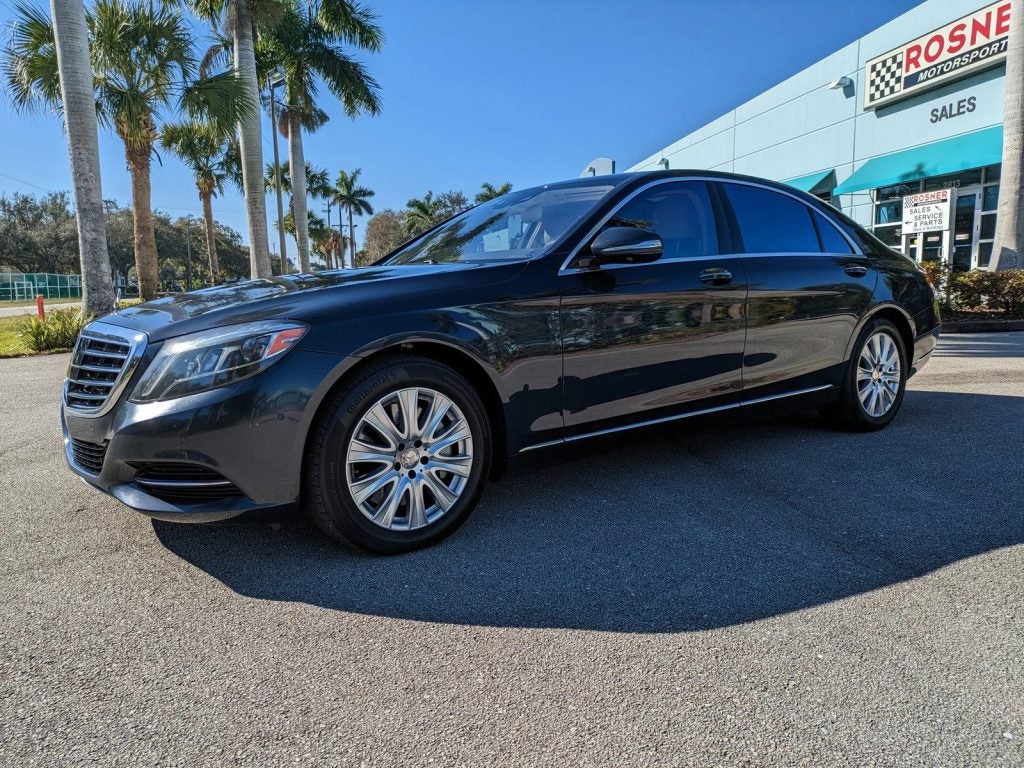
Mercedes Best Used Luxury Car in 2026

3 Best Used Luxury Cars Under $40k in 2026

Luxury vehicles are often associated with six-figure price tags, but the modern pre-owned market tells a different story. Because luxury cars depreciate more quickly during their first few years, buyers can often find premium vehicles with advanced engineering, high-end materials, and strong performance for under $40,000. For shoppers researching the best luxury cars under $40,000, the goal isn’t simply finding the lowest price. The smartest purchases balance: build quality driving performance long-term reliability brand reputation resale value Several vehicles consistently stand out for delivering exceptional value in this category. The following models represent three different types of luxury experiences—flagship comfort, performance-focused driving, and compact premium excitement—while remaining attainable in the sub-$40,000 market What Are the Best Luxury Cars Under $40,000? For buyers seeking premium quality without the premium price, these models stand out: Model Vehicle Type Strength Ideal Buyer Mercedes-Benz S-Class Flagship luxury sedan Comfort and prestige Buyers wanting premium luxury BMW 4 Series Sport luxury coupe Performance and balance Drivers seeking sporty handling MINI John Cooper Works Compact performance car Fun driving experience Enthusiasts wanting something unique Each model represents a different approach to luxury driving, allowing buyers to prioritize comfort, performance, or personality depending on their preferences —while remaining attainable in the sub-$40,000 luxury market. Mercedes-Benz S-Class (Used) Few vehicles represent luxury better than the Mercedes-Benz S-Class. For decades, it has served as the flagship sedan for the brand and often sets the benchmark for comfort, technology, and refinement across the automotive industry. Earlier model years—particularly from the mid-2010s—can now be found within the $25,000–$40,000 range, making the S-Class one of the most compelling luxury values available today. Why the S-Class Is a Standout Luxury Value The S-Class offers many features that define modern luxury sedans: Handcrafted interior materials including leather and wood trim Advanced suspension systems designed for exceptional ride comfort Powerful yet refined turbocharged and V8 engines Sophisticated driver-assistance technology Despite being several years old, many S-Class models still feel modern due to the brand’s tradition of introducing new technologies in this platform first. According to Car and Driver, the S-Class has long been considered “the benchmark for luxury sedans,” influencing the design and technology of competing luxury vehicles for decades. For buyers willing to consider a pre-owned flagship sedan, the S-Class offers one of the most dramatic luxury upgrades per dollar available in the used market. BMW 4 Series (Used) Drivers who want luxury combined with strong driving dynamics often gravitate toward the BMW 4 Series. Originally introduced as the coupe variant of the BMW 3 Series, the 4 Series blends premium comfort with engaging performance. Originally introduced as the coupe counterpart to the BMW 3 Series, the 4 Series blends sport-focused driving dynamics with premium interior materials and modern technology. Earlier model years frequently fall within the $30,000–$40,000 range, making them attractive options for buyers seeking a sporty luxury coupe. Why It’s a Top Luxury Performance Pick The 4 Series is widely praised for delivering a balance of comfort and performance rarely found in this price category. BMW M4 Highlights include: rear-wheel-drive performance architecture precise steering and balanced handling refined turbocharged engine options premium infotainment and driver technology Automotive journalists consistently praise the platform’s driving experience. Car and Driver describes the BMW 4 Series as a coupe that “delivers engaging performance while maintaining everyday luxury usability.” Because earlier model years have depreciated significantly, many examples now fall comfortably within the luxury cars under $40k category while still feeling modern and upscale. Mini Cooper (Used) The MINI John Cooper Works (JCW) offers a very different type of luxury experience—one centered on performance, personality, and driving excitement. Although smaller than traditional luxury sedans, the JCW trim represents the brand’s highest performance tier and competes with premium compact performance vehicles from manufacturers such as BMW and Audi. Why the Mini JCW is A Good Used Car The JCW version transforms the MINI into a performance-focused driver’s car while maintaining premium interior quality and technology. Mini Cooper JCW Highlights include: high-output turbocharged engine tuning upgraded sport suspension and braking systems distinctive styling and interior design premium infotainment features Enthusiast publications frequently praise the Mini JCW for its driving excitement. MotorTrend notes that the John Cooper Works models are “Zippy even in base form” and “unlike anything else on the road” placing them among the most engaging compact performance cars available. For drivers who prioritize fun and individuality, the MINI JCW provides a distinct luxury driving experience rarely found at this price point. Why Used Luxury Cars Under $40,000 Can Be a Smart Investment One reason so many luxury vehicles appear on lists like this is depreciation. Luxury vehicles often lose value faster during their first few years of ownership. While this can be challenging for the original buyer, it creates significant opportunities for second owners. Benefits of buying a luxury car in the $25k–$40k range include: Access to Higher-Tier Engineering Luxury brands invest heavily in: advanced materials superior ride quality refined powertrains premium interior craftsmanship These elements often remain competitive for many years. Significant Price Advantage Many vehicles originally priced between $60,000 and $90,000 can be purchased for less than half of their original cost after several years. Proven Platforms By the time a model reaches the used market, reliability trends and maintenance expectations are often well documented. Because of these factors, carefully chosen pre-owned luxury vehicles can represent exceptional value for drivers seeking premium vehicles without paying new-car prices. Finding the Right Luxury Car Under $40,000 While many luxury vehicles fall within this price range, finding the right one requires careful consideration. Buyers should evaluate: • service history reports like CARFAX and maintenance records • overall condition and mileage • ownership history and vehicle reports • model-specific reliability trends • the reputation of the dealership selling the vehicle Working with dealerships that specialize in luxury or enthusiast vehicles can also help ensure buyers are choosing from well-maintained and carefully selected inventory. For those interested in exploring available vehicles in this category, Rosner Motorsports maintains a selection of affordable luxury vehicles available for viewing here: Frequently Asked Questions About Luxury Cars Under $40,000 Can you really buy a luxury car for under $40,000? Yes. Due to depreciation, many luxury vehicles originally priced far above $40,000 become accessible within a few years on the pre-owned market. What brands offer the best luxury vehicles under $40k? Several premium manufacturers frequently appear in this category, including: Mercedes-Benz BMW Audi Porsche MINI These brands are known for producing vehicles that maintain their appeal even after several years of ownership. Are used luxury vehicles reliable? Yes, many used luxury vehicles can remain highly reliable for years when they are properly maintained and have a documented service history. Luxury manufacturers typically engineer their vehicles with advanced materials, precision components, and sophisticated drivetrains designed for long-term performance. When routine maintenance is followed, many luxury vehicles continue to deliver strong reliability well beyond their initial ownership period. At Rosner Motorsports, every pre-owned vehicle undergoes a 72-point inspection before being offered for sale. This inspection helps ensure that the vehicle meets strict standards for condition, performance, and safety. In addition, the Rosner Motorsports service center remains available to assist owners with ongoing maintenance and service to help preserve long-term reliability. Is buying a used luxury car a good investment? Yes—buying a used luxury car can be a smart financial decision when the vehicle is purchased after its largest depreciation period. Most vehicles lose the greatest portion of their value during the first three to five years of ownership, when many luxury cars depreciate 40–60% from their original manufacturer’s suggested retail price (MSRP). This early depreciation occurs because new vehicles rapidly lose value once they leave the dealership and because newer models frequently introduce updated technology and design features. For second owners, this depreciation creates a significant opportunity. Buyers can purchase vehicles that originally sold for much higher prices while still benefiting from the engineering, performance, safety technology, and premium interior materials that define luxury brands. As a result, purchasing a well-maintained luxury vehicle after its initial depreciation cycle can provide substantial value relative to its original cost, especially when the vehicle has a documented service history and strong reliability ratings. Visit Rosner Motorsports for a wide selection of quality pre-owned luxury vehicles. Buy a Luxury Car Under $40,000 in Florida at Rosner Motorsports The pre-owned luxury market has created a unique opportunity for buyers who want exceptional vehicles without paying the original luxury price. With careful research and the right dealership, it is possible to find vehicles that still deliver the craftsmanship, performance, and refinement that define premium automotive brands. For drivers exploring the best luxury cars under $40,000, the key is selecting vehicles known for strong engineering, lasting design, and proven long-term value. When these factors align, buyers can enjoy many of the benefits of top-tier luxury vehicles at a far more accessible price point. At Rosner Motorsports in Vero Beach, our team specializes in curating premium pre-owned vehicles that meet high standards for condition, history, and driving experience. Each vehicle is carefully selected and undergoes a comprehensive inspection before being offered for sale. If you are researching luxury vehicles in this price range, we invite you to explore our current selection of affordable luxury cars or speak with our team about finding the right vehicle for your needs. Affordable Luxury Car Inventory